
Andy Neal: What Reactive Attachment Disorder Taught Him About Adoptive Parenting
One version of the adoption story gets told a lot with a smiling family photo and a caption about forever. Andy Neal has lived a different version.
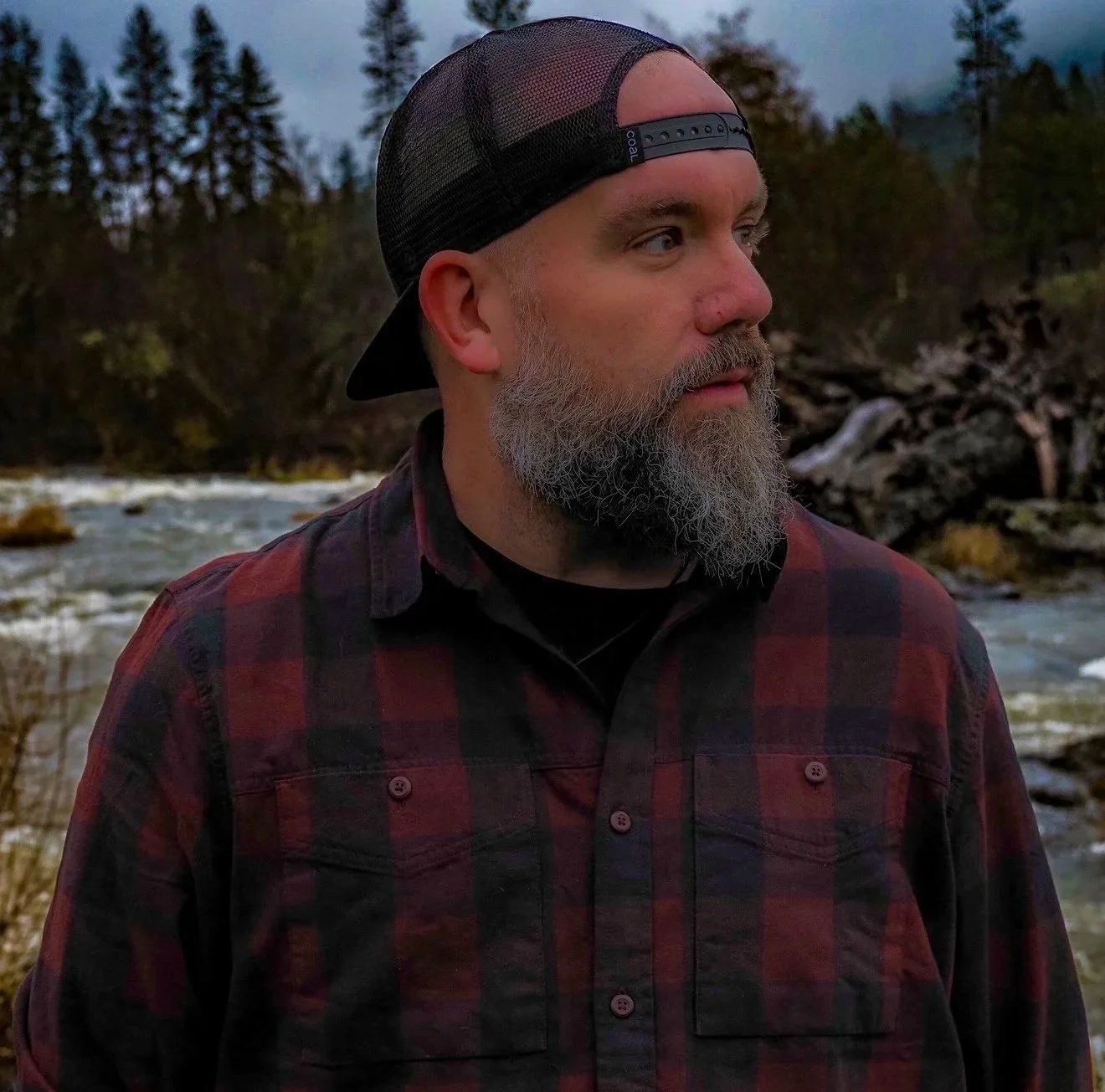
Andy Neal, influencer at @andyfilmsandhikes, shares what RAD or Reactive Attachment Disorder taught him about being an adoptive parent and what he hopes other parents know about RAD and adoption.
Andy is a content creator, speaker, and mental health advocate known online as @andyfilmsandhikes. Before the cameras and the hiking trails, he spent more than 15 years in evangelical ministry. He built a life around a specific kind of certainty. Then that life unraveled, and he had to rebuild from scratch. He went back to school, studied filmmaking, and found his way into honest storytelling.
That same honesty now shapes how he talks about adoption.
Andy and his wife Lindsey have three children, all adopted from foster care. He loves them fiercely. He will also tell you, without hesitation, that love alone isn't enough and the adoption community desperately needs to stop pretending otherwise.
"Trauma Doesn't Disappear in Permanency"
When Andy and Lindsey began their adoption journey, they came in with open hearts and deep commitment. What they weren't fully prepared for was what commitment actually looks like when a child arrives carrying the weight of abuse, neglect, and broken systems.
"Our kids came to us with histories, losses, and wounds that did not disappear just because they entered a loving home," Andy says. "Adoption is not the end of trauma. It does not erase what came before."
For their oldest children, those wounds eventually led to a diagnosis of Reactive Attachment Disorder also known as RAD, a trauma-related condition that can develop in children who experienced extreme neglect, abuse, or disrupted attachment in their earliest years. At its core, RAD is about attachment being fractured at the developmental level.
Getting to the diagnosis, Andy says, was actually faster than it is for most families. What came after was harder.
What RAD Actually Looks Like
RAD is widely misunderstood both by parents and providers and that misunderstanding costs families enormously.
In public, a child with RAD may appear charming, easy, even delightful. Behind closed doors, the picture can look entirely different: chronic control battles, rejection of nurture, aggression, lying, sabotaging closeness, and a relentless effort to destabilize the people trying hardest to love them.
"That can leave families feeling isolated, disbelieved, and blamed," Andy says. "People see the behavior and assume bad parenting, bad behavior, or some more familiar diagnosis. But when attachment trauma is in the picture, you're often dealing with something much deeper."
He's careful not to reduce children with RAD to their diagnosis. The behavior isn't because of malice. It's come from a nervous system shaped by early experiences where safety was never guaranteed.Families need to understand what they're dealing with in order to move forward. Behavior charts won't fix it. Stricter parenting won't fix it. And while growth is possible, Andy is honest about the long road: "Healing can happen, but with RAD, it is rare. This is serious, complex, and often lifelong."
Where the System Falls Short
In theory, there are supports available for adoptive families facing complex trauma: therapy, trauma-informed services, crisis response, respite care, school supports. In practice, Andy describes something closer to a maze.
"Families are told to call one place, then another, then another, and by the time something happens, things are already on fire."
What's missing isn't good intentions. What’s missing is coordination, affordable access, providers who are actually adoption-competent and long-term support that doesn't evaporate once finalization paperwork is signed.
And most critically, what’s missing is support for the whole family. "Siblings are affected. Marriages are affected. Parents are affected," Andy says. "Families need to be seen as systems, not just as people reacting badly to a difficult child."
What He Wishes Someone Had Said
If Andy could go back and hand himself something before the journey began, it wouldn't be a checklist. It would be honesty.
"I wish I had understood more fully that love, commitment, and good intentions are not enough by themselves. They matter deeply, but they are not magic."
He wishes he'd known how early trauma reshapes the brain and nervous system, how grief doesn't end at placement and how underprepared most systems are to support families once the adoption is finalized. The "forever family" narrative, as beautiful as it sounds, often skips over the harder chapters that come next.
For families just starting out, he says: go in with open hearts and open eyes. "Kids from hard places don't need saviors. They need patient, informed, supported adults who understand that healing is not linear and gratitude is not guaranteed."
What Actually Helps
Andy's advice for families who suspect RAD or are struggling is direct:
Find clinicians who are genuinely trauma-informed and adoption-competent. Not every therapist is and finding one who understands the complete picture between both is essential.
Document patterns over time. A long view tells a clearer story than a single clinical snapshot.
Don't wait for crisis. Build your support team before you are in desperate need for it. Peer communities, respite care, and honest friendships .
Tell the truth. Pretending things are fine when they're not helps no one including you, your child, or the next family coming up behind you.
For the broader community including the churches, neighbors, schools, and nonprofits, he has an ask: show up practically. "Meals. Respite. Flexible support. Trauma-informed education. Real friendship. Those things matter."
Why He's Talking Now
Andy isn't sharing his family's story for inspiration. He's sharing it because silence has a cost and too many families are paying it.
"Too many families are suffering in silence, and too many kids are falling through the cracks while systems offer slogans instead of help."
He wants less shame, more honesty and better policy. More than anything, Andy is advocating an adoption culture that doesn't treat finalization as the finish line and then disappear.
"For many families, finalization is just the point when the harder work begins."
Follow Andy at @andyfilmsandhikes on Instagram, Facebook, TikTok, Youtube and Substack, where he continues to create content at the intersection of mental health, the outdoors, and honest storytelling.
If you're navigating adoption, foster care, or surrogacy, and looking for community and resources, you're in the right place. Famally exists for exactly this. Join us.